France’s Wandercraft acquires Ekso Bionics to deepen US robotics reach
The French robotics company is adding Ekso’s US clinical relationships and commercial reach as it expands across rehabilitation and personal mobility.
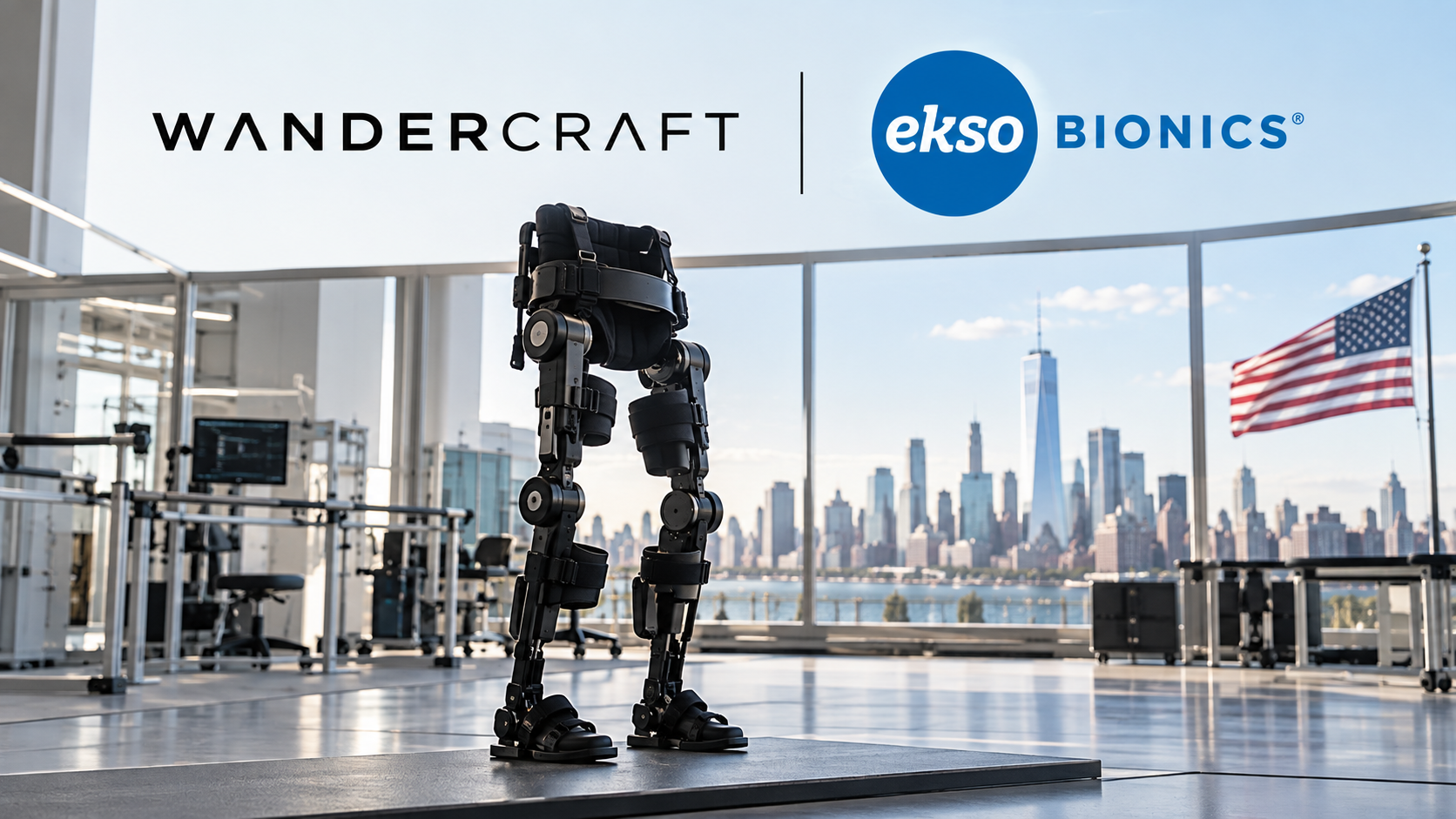
Paris-founded Wandercraft has acquired California-based Ekso Bionics, adding an established US exoskeleton business as the French robotics company expands its reach in rehabilitation and personal mobility. The transaction, announced on October 1, 2026, brings together products used by rehabilitation professionals and individuals with spinal cord injuries.
Wandercraft bought Ekso Bionics, Inc. from a subsidiary of ChronoScale Holdings Corporation. Financial terms were not disclosed. The boards of Wandercraft and ChronoScale unanimously approved the transaction, which was signed and closed simultaneously, according to the announcement.
The strategic gain is not simply a wider product range. Wandercraft is combining its robotics technology and position in Europe, the Middle East and Africa with Ekso’s US commercial reach, clinical experience and relationships. For a European medical-technology company, those connections offer a route to reaching more American rehabilitation providers and patients.
A broader rehabilitation and home-use portfolio
The combined portfolio covers both supervised rehabilitation and everyday personal mobility. Atalante X, Wandercraft’s rehabilitation exoskeleton, and EksoNR currently support standing and walking at more than 700 rehabilitation centers worldwide, according to the companies. Wandercraft separately says Atalante X is used in more than 150 rehabilitation and research centers globally.
Together, the two rehabilitation platforms hold US Food and Drug Administration clearances and CE marking covering stroke, spinal cord injury, multiple sclerosis and acquired brain injury. The announcement presents these as complementary products; it does not say that every listed condition is covered by both devices.
For personal mobility, the deal pairs Wandercraft’s Eve with Indego Personal. Eve is an FDA-cleared, hands-free, self-balancing exoskeleton, while Indego Personal is a modular wearable system. Both serve eligible people with spinal cord injuries, offering different approaches to upright mobility. Wandercraft said it intends to continue supporting all four products and their users.
“By bringing together our products, teams, and clinical relationships on both sides of the Atlantic, we have an exceptional opportunity to expand access to robotic mobility worldwide,” said Matthieu Masselin, Wandercraft’s chief executive and co-founder.
Building on an existing US presence
The acquisition is an expansion of Wandercraft’s US operations rather than its first entry into the market. Patients are already receiving training at the Walk in New York by Wandercraft rehabilitation center. The company also has a dedicated access team helping users and care teams navigate benefits, documentation, reimbursement, financing and coordination with clinicians and payers.
That support is relevant to the commercial opportunity. For US individuals who meet eligibility and medical-necessity requirements, Medicare covers qualifying personal exoskeletons under its brace benefit category, billed under HCPCS code K1007, according to the announcement. Coverage is therefore conditional, not a blanket entitlement for every prospective user.
Bringing Ekso into the business adds clinical and commercial infrastructure alongside that access work. The companies said rehabilitation centers would be able to consult specialists familiar with both Atalante X and EksoNR while retaining dedicated, product-specific support. They also plan to use their greater scale to advocate for broader coverage worldwide.
Scale through acquisition
The deal brings two previously separate exoskeleton developers under one owner, giving Wandercraft a wider offering across rehabilitation facilities and home use. Ekso contributes two decades of engineering, research and clinical work, according to the release. That accumulated experience is a central part of the acquisition’s rationale, alongside access to US customers.
The announcement did not provide a purchase price, revenue figures or integration timetable. Those omissions limit any assessment of the deal’s financial scale. Its operational direction is clearer: Wandercraft is using acquisition to deepen its American medical-robotics presence, with an explicit commitment to maintain the existing products and customer support.