UCB advances $2bn plan for first US biologics manufacturing campus
The Belgian drugmaker has dedicated its future site at Georgia’s Rowen development, where it plans a manufacturing campus expected to create about 330 permanent jobs.
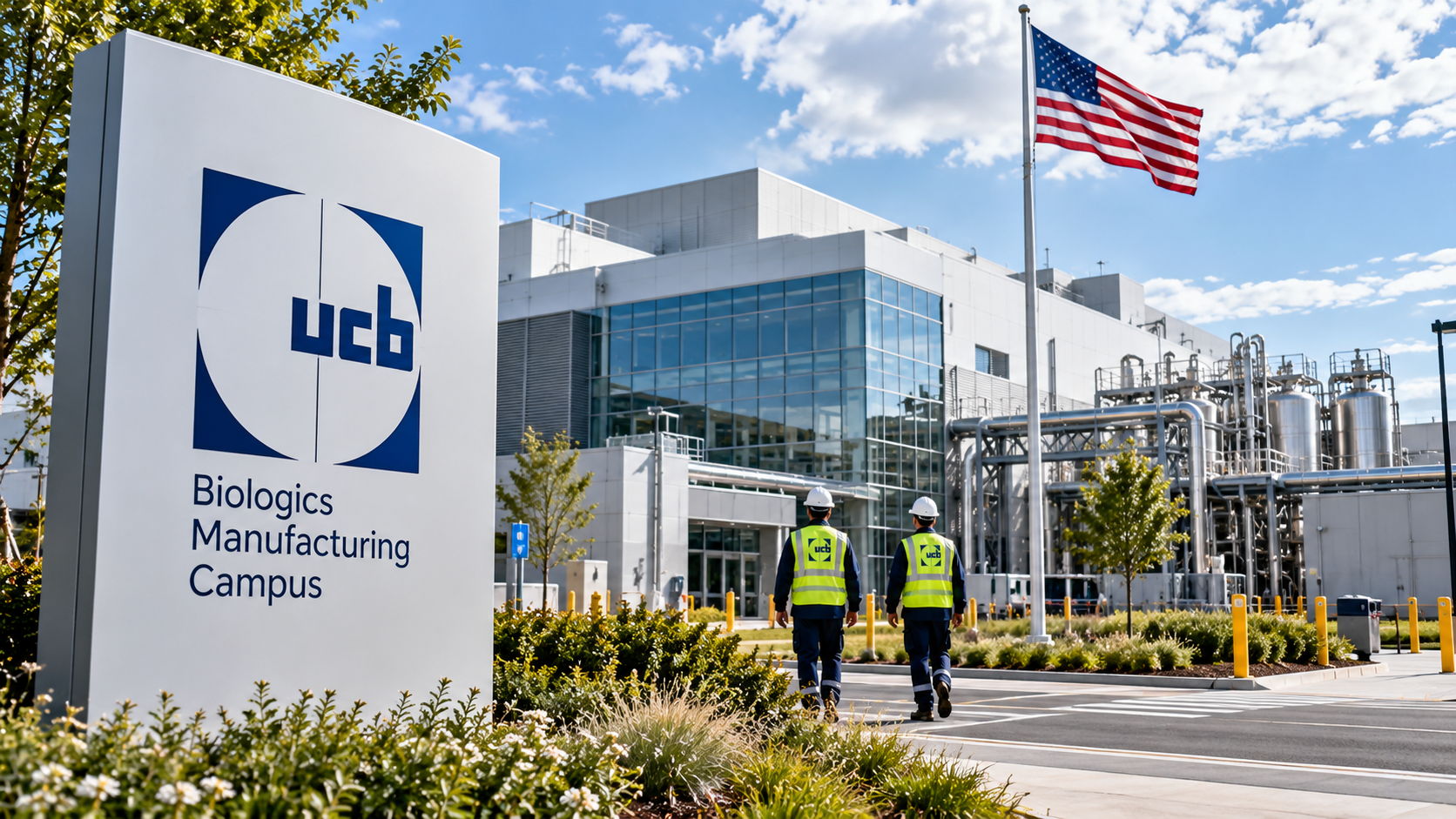
Belgian biopharmaceutical company UCB has dedicated the site of its planned $2 billion biologics manufacturing campus in Gwinnett County, Georgia, marking another step toward its first US manufacturing location. The October 9 ceremony at the Rowen development signals progress on a major expansion of the company’s American operations, though the facility remains a long-term project rather than an imminent source of production.
The approximately 460,000-square-foot campus is planned for 79 acres within Rowen, a roughly 2,000-acre mixed-use development between Atlanta and Athens. UCB expects the investment to create about 330 highly skilled permanent jobs and support more than 1,000 construction jobs. The company puts the anticipated economic impact at approximately $5 billion.
The event included the unveiling of Emmanuel Janssen Circle, a stonework installation at the future campus entrance named for UCB’s founder and his family. UCB described the ceremony as marking the next phase of development; it did not announce the start of manufacturing.
From an established US base to domestic production
For UCB, the project is an expansion of an existing American presence, not an entry into a new market. Its US headquarters has been in metro Atlanta for more than 30 years, and the company already employs more than 400 people in Georgia. The new campus would add biologics manufacturing to that footprint.
UCB develops medicines for severe autoimmune and neurological conditions. Project leaders say the Rowen facility will support growing demand, using a digital-first approach incorporating artificial intelligence, robotics and automation. Its strategic significance lies in adding US production capability to a business that already has a substantial local base.
“Our manufacturing investment in the United States reflects our long-term commitment to patients, strengthening our ability to serve them while contributing to scientific innovation, highly skilled jobs, and economic growth in Georgia,” chief executive Jean-Christophe Tellier said in UCB’s announcement.
UCB cited Georgia’s life sciences ecosystem, skilled workforce, infrastructure and access to academic and research institutions as reasons for choosing the state. It is seeking partnerships with local universities, schools and workforce development organisations to help build a pipeline of biomanufacturing talent.
A substantial commitment, with a long lead time
The timetable is an important qualification to the investment and employment figures. Design and construction are expected to take six to seven years, according to information Rowen officials provided in March and reported by Urbanize Atlanta. The dedication therefore marks a development milestone, not the beginning of a near-term hiring surge or an immediate increase in medicine supply.
Gwinnett County has committed roughly $174 million in incentives and infrastructure investment to support the project, Urbanize reported, citing officials. That package includes property tax abatements, fee waivers and utility improvements. The support underlines the local economic stakes attached to securing the Belgian company’s manufacturing investment.
An anchor for Rowen’s wider ambitions
UCB’s campus is also a cornerstone of Rowen’s broader development strategy. Located about 35 miles from Atlanta, the district is intended to combine laboratories, offices and clean manufacturing with housing, hospitality, shops and public spaces. Its governing foundation’s board includes leaders from the University of Georgia, Georgia Tech, Emory University and Georgia Gwinnett College.
Rowen broke ground in December 2022 and completed a $32 million infrastructure project in 2025. That work delivered two miles of roadway, greenspaces and seven miles of multi-use pathways, opening up 800 acres and providing utilities for that section. UCB’s commitment gives the emerging district a major manufacturing project, while the existing infrastructure provides a foundation for the company’s lengthy buildout.