Scarlet raises $50m to expand AI medical-device certification in the US
The London-based certification body will use its Headline-led Series B to expand in the US and Asia-Pacific, hire specialist reviewers and engineers, and broaden its services.
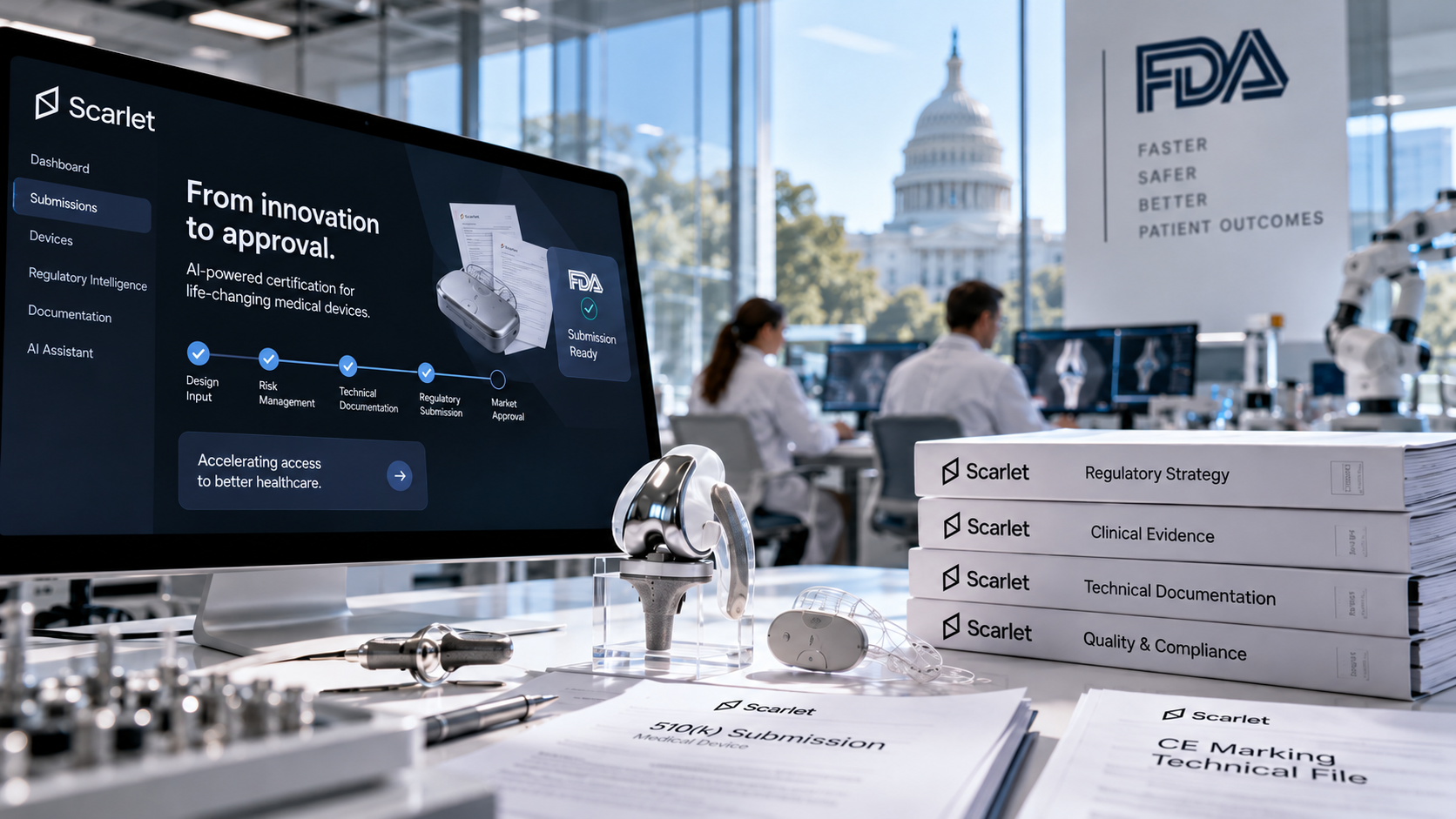
Scarlet, a London-based certification body for AI and software medical devices, has raised $50 million in Series B funding to support expansion in the United States and Asia-Pacific. Announced on October 12, 2026, the round backs a company seeking to shorten the gap between developing medical AI and getting it through regulatory assessment.
US-based Headline led the financing, with Notion Capital joining as a new investor. Existing backers Atomico, Creandum, Kindred Capital and Entrepreneurs First also participated. Headline partner Nancy Xiao McLaughlin is joining Scarlet’s board. Alongside geographic expansion, the proceeds will fund additional expert AI reviewers and engineers and a broader range of certification offerings.
The US push builds on an existing regulatory and commercial foothold rather than marking a first entry. Scarlet is recognised by the US Food and Drug Administration as a Third Party Review Organisation, and its customers include US radiology company DeepHealth. The announcement did not specify a US office location, hiring target or expansion timetable.
A European regulatory foundation
James Dewar and Jamie Cox founded Scarlet in London in 2021 after working on AI medical devices at Babylon Health. The company spent its first three years working with regulators to obtain the necessary designations before issuing any certificates—a lengthy preparatory phase for a business whose selling point is faster assessment.
Scarlet is an EU notified body and a UK approved body under the Medicines and Healthcare products Regulatory Agency. Tech Funding News reports that its FDA third-party review recognition is listed under Scarlet NB B.V. These roles give the company a regulatory foundation across multiple markets, although its US third-party review status is distinct from its European certification role.
The company says it is the only organisation among roughly 52 bodies designated under the EU Medical Device Regulation to specialise in software and AI. That is its stated competitive distinction: a specialist service designed around iterative software development, rather than a general-purpose medical-device assessment business.
Earlier financing helped build that foundation. According to Tech Funding News, Scarlet raised a £6 million seed round led by Creandum in August 2022, followed by a $17.5 million Series A led by Atomico in June 2024. Its valuation in the latest round was not disclosed.
Keeping assessment aligned with software updates
Scarlet’s argument is that medical AI development has outpaced the capacity of traditional assessment processes. The company points to diagnostic models that can be trained in weeks but face expert assessments lasting 12 to 18 months, with minor updates potentially adding another six to eight months of delay. Those figures describe the bottleneck it targets, not a disclosed comparison of Scarlet’s own turnaround times.
Customers upload technical documentation to an AI-enabled platform, after which qualified reviewers assess submissions against the relevant regulations. Human experts make the certification decision. Scarlet sells subscriptions covering ongoing surveillance, annual audits and product changes, making its relationship with developers continuous rather than limited to an initial assessment.
Its customer roster includes NHS England, cancer-detection company Skin Analytics and AI scribe providers Heidi Health and Tandem. In a statement accompanying the funding, Flok Health co-founder and chief executive Finn Stevenson said: “We want to release upgrades to our medical device twice a month. We can with Scarlet.”
Scaling an existing US foothold
For Scarlet, the US opportunity is to extend that specialist model where it already has FDA recognition and a customer relationship. The planned reviewer and engineering hires address the operational side of that ambition: expanding assessment capacity while supporting frequent product changes. The funding announcement establishes the direction, but leaves the scale and timing of the American build-out undefined.