Lonza agrees to buy five Merck sites, more than doubling US network
The Swiss contract manufacturer will expand its US network from four to nine sites, adding capabilities in antibody-drug conjugates, viral vectors and advanced drug delivery.
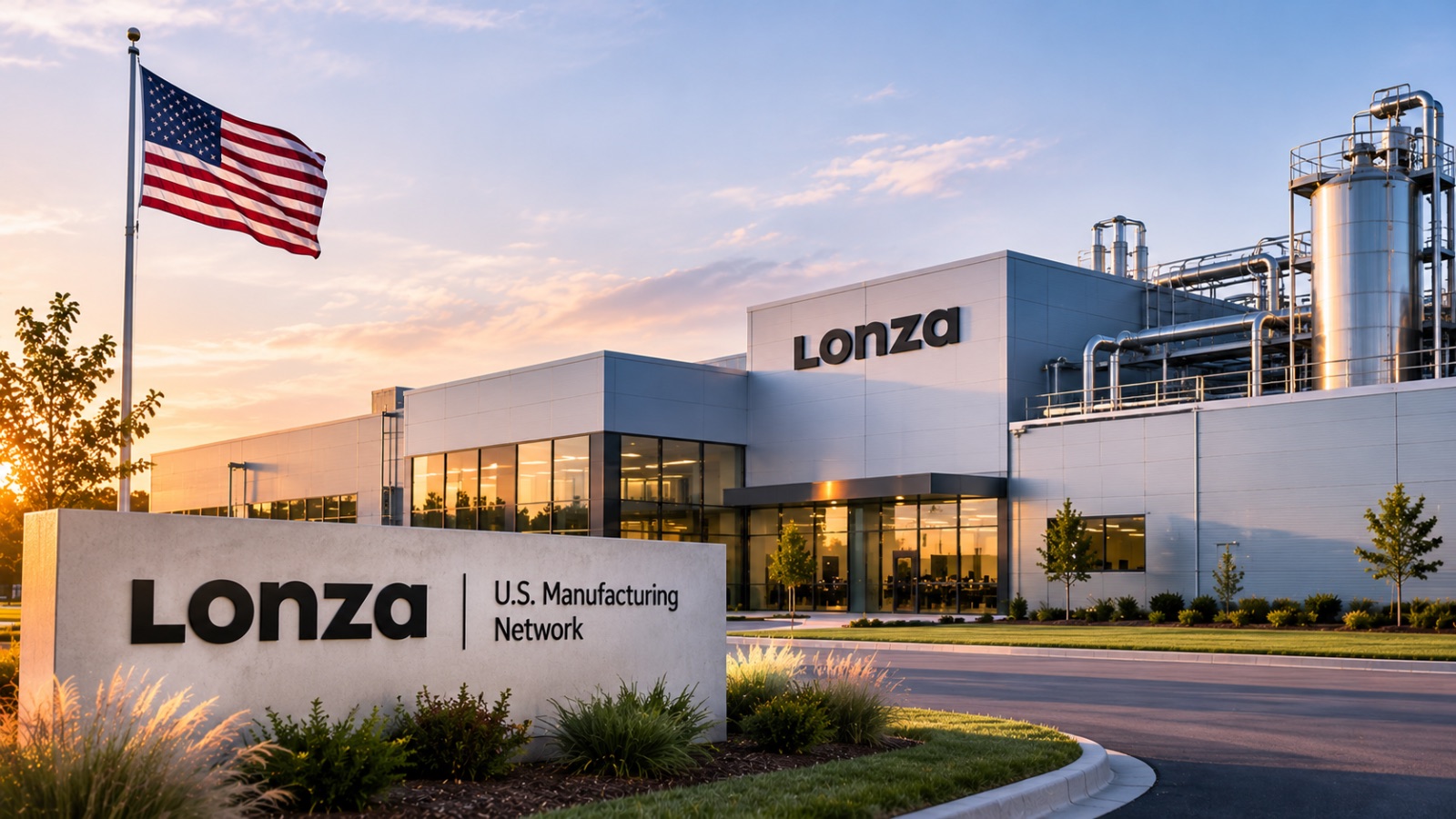
Switzerland’s Lonza has agreed to acquire five US contract development and manufacturing sites from Germany’s Merck KGaA, more than doubling its American site network and broadening its capabilities in complex medicines. The agreement, announced on November 3, 2026, is expected to close in mid-2027, subject to customary closing conditions.
The acquisition will take Lonza’s US contract development and manufacturing organization, or CDMO, network from four sites to nine. Approximately 1,100 employees are expected to transfer, bringing its US workforce to more than 6,000. Until completion, the businesses will continue to operate independently within Merck.
The expansion is more than a geographic addition. The facilities bring complementary technologies spanning bioconjugation, high-potency payload-linkers, viral vectors and advanced drug delivery, giving Lonza a broader US-based offering from clinical development through commercial manufacturing.
Five sites, distinct capabilities
The assets are spread across four states, with each location contributing a different part of the manufacturing portfolio:
- St. Louis, Missouri: bioconjugation capabilities, supporting the combination of biological molecules and drug components.
- Madison and Verona, Wisconsin: high-potency payload-linkers used in antibody-drug conjugates.
- Carlsbad, California: end-to-end viral-vector services, including aseptic fill-finish.
- Indianapolis, Indiana: lipid nanoparticles, liposomes and PEGylated proteins, alongside aseptic fill-finish capabilities.
Antibody-drug conjugates, or ADCs, link drug payloads to antibodies to target cancer cells. Manufacturing them requires both conjugation expertise and the ability to produce the payloads and linkers. Bringing those capabilities into the same US network strengthens Lonza’s offering across several critical production steps.
The deal also builds on a European manufacturing base: Lonza already operates an ADC facility in Visp, Switzerland, according to Health Chosun. The US assets therefore extend an existing capability rather than introduce an entirely new business.
Buying scale closer to customers
Acquiring established facilities offers Lonza a route to additional US scale without waiting for new plants to be built. GeneOnline frames the transaction as an alternative to the multi-year timelines associated with greenfield manufacturing projects. The assets bring existing technical operations and employees, although ownership will not transfer until closing.
Chief executive Wolfgang Wienand described the transaction as consistent with the company’s One Lonza strategy, bringing it closer to US customers and increasing the resilience of its manufacturing network, according to Ad Hoc News. For drug developers, the expanded portfolio offers more specialized production capabilities within the American market.
The move comes amid consolidation in contract manufacturing. Health Chosun points to Novo Holdings’ $16.5 billion acquisition of Catalent in 2024 and Samsung Biologics’ acquisition of a former GSK production facility in Rockville, Maryland. That backdrop makes US manufacturing presence an important competitive dimension, although Lonza’s deal is specifically focused on complementary capabilities in advanced therapies.
Revenue potential, with a long margin runway
The transaction carries an enterprise valuation in the low- to mid-triple-digit millions of Swiss francs, according to Ad Hoc News. Lonza plans to pay the consideration in cash, using cash on hand and existing credit facilities.
Lonza expects the acquired businesses to generate approximately CHF 250 million in sales in 2028. Their CORE EBITDA margin is initially expected to be below the group’s level, with an insignificant impact on the group. The businesses could reach Lonza’s future group margin level at peak sales by the middle of the 2030s, making integration and utilization important longer-term tests.
For Merck, the sale redirects investment toward its core life-science businesses. BioReliance’s contract testing services are excluded. For Lonza, the immediate milestone remains completion: the expanded network and projected revenue contribution are prospective, not yet part of its operating results.