Airbus wins 75-jet order from California lessor Aviation Capital Group
The largest order in ACG’s history deepens Airbus’s relationship with the California-based lessor, with deliveries scheduled for 2032–2035.
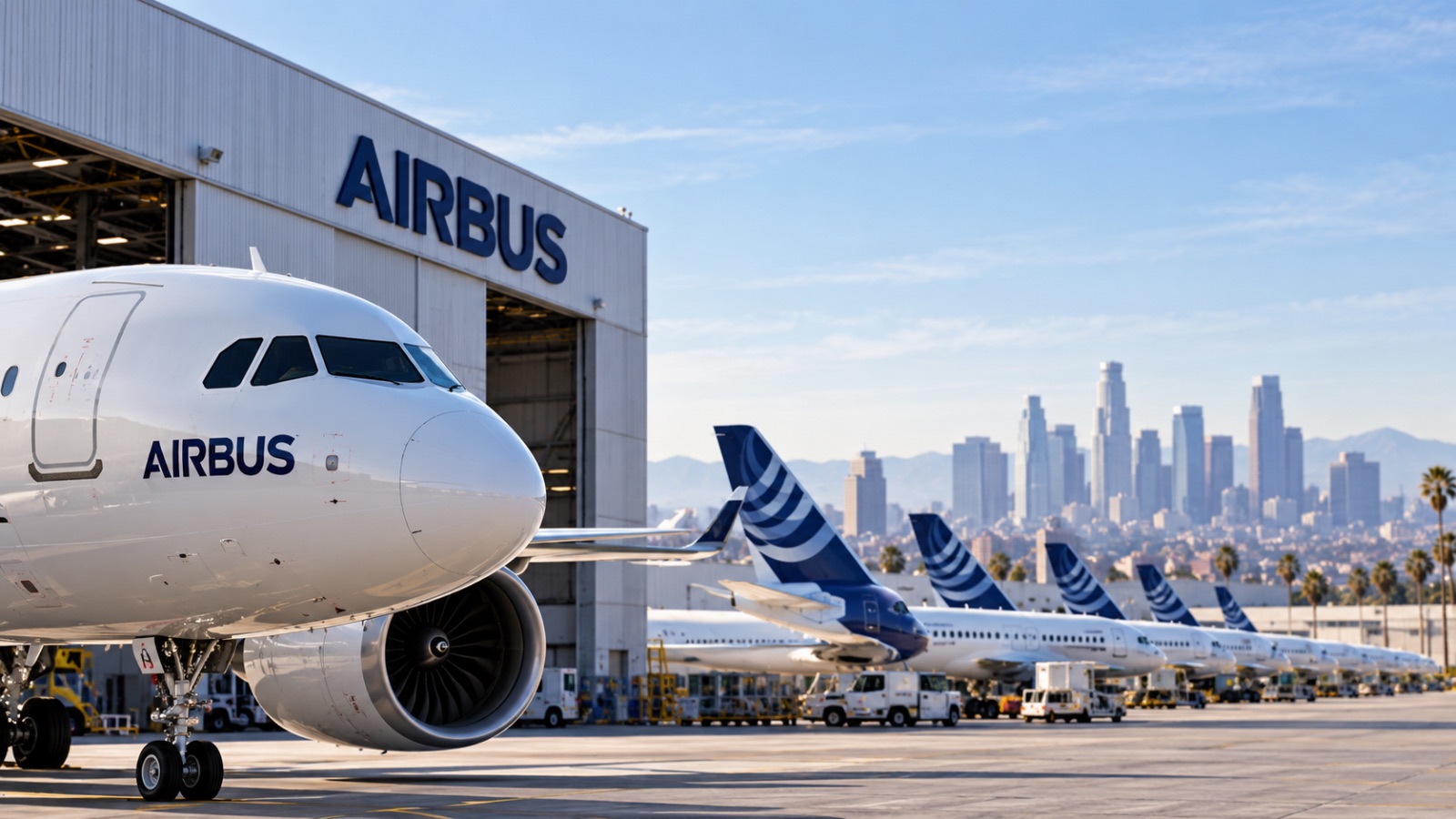
Airbus has secured an order for 75 A320neo Family aircraft from Newport Beach, California-based Aviation Capital Group, deepening its relationship with a US aircraft lessor whose customers span roughly 50 countries. Announced on October 16, 2026, the purchase is the largest in ACG’s history, with deliveries scheduled between 2032 and 2035.
The agreement includes rights to convert orders between variants within the A320neo Family, giving ACG flexibility to adjust its future aircraft mix. The companies did not disclose the purchase price or the breakdown between aircraft variants.
For Airbus, the transaction is an expansion through an established American customer rather than a new US operating site. Its significance extends beyond the domestic airline market: ACG leases aircraft internationally, making the California business a channel through which Airbus can reach carriers seeking both replacement aircraft and additional capacity.
A larger pipeline into the mid-2030s
ACG had 118 A320neo Family aircraft in its fleet as of June 30, 2026. The new purchase brings its outstanding orders for the family to 115 aircraft. Those figures distinguish the aircraft already in its fleet from the delivery commitments that will support future leasing activity.
“ACG’s portfolio strategy is focused on new-technology narrowbody aircraft that are most in-demand with airlines globally,” said Thomas Baker, ACG’s chief executive and president. He described the record order as a statement of confidence in the long-term future of air travel and the lessor’s role connecting airlines, aircraft and capital.
Rob Downes, ACG’s chief OEM officer, said the A320neo Family remained among the most sought-after aircraft families among its airline customers. He said the purchase would address replacement and growth requirements while extending ACG’s orderbook pipeline into the mid-2030s.
The variant-conversion rights are an important part of that strategy. With deliveries beginning in 2032, ACG is committing to aircraft years before they enter its portfolio, while retaining some ability to adapt the mix to customer requirements. The announcement does not identify airline placements for the 75 aircraft, so the US location of the buyer should not be read as their eventual operating market.
An established leasing relationship
Airbus’s relationship with ACG dates to the lessor’s first Airbus order in 2007, according to Benoît de Saint-Exupéry, executive vice-president of sales for Airbus’s commercial aircraft business. The latest agreement extends that relationship’s delivery horizon well into the next decade.
Founded in 1989, ACG is wholly owned by Tokyo Century Corporation. As of June 30, 2026, it reported approximately 500 owned, managed and committed aircraft, with a leasing customer base of roughly 85 airlines. Alongside commercial aircraft leasing, it provides aircraft asset-management services and financing solutions for third parties.
Operating efficiency is part of the product’s appeal. According to the announcement, the A320neo Family offers up to 20% lower fuel consumption and carbon dioxide emissions per seat than previous-generation aircraft, alongside a 50% noise reduction. Those are product-performance claims, not quantified savings for ACG’s future airline customers.
US ties beyond commercial aircraft
The order adds to Airbus’s transatlantic business relationships. Separately, Aerospace Global News reported on October 12 that Airbus and US defence company Kratos had completed the first European flight of their U740 Valkyrie uncrewed combat aircraft. That partnership, announced in July 2025, combines a US-developed aircraft platform with European mission technology and targets operational capability for Germany in 2029.
The ACG transaction follows a different model: an American leasing customer purchasing European aircraft for a global airline market. Its immediate importance is the long-term sales commitment and customer reach it provides, rather than any announced addition to Airbus’s US manufacturing capacity.