Why Matilda Djerf Chose New York for Djerf Avenue’s First Store
After years of building Djerf Avenue online and testing U.S. demand through pop-ups, Matilda Djerf has chosen New York for the Swedish brand’s first permanent store.
Matilda Djerf has already been profiled countless times as the influencer who turned an online following into a global fashion and lifestyle brand. But the more interesting Scaling in America story starts much later: after building Djerf Avenue almost entirely through digital channels, why did the Swedish company choose New York — rather than Stockholm — for its first permanent store?
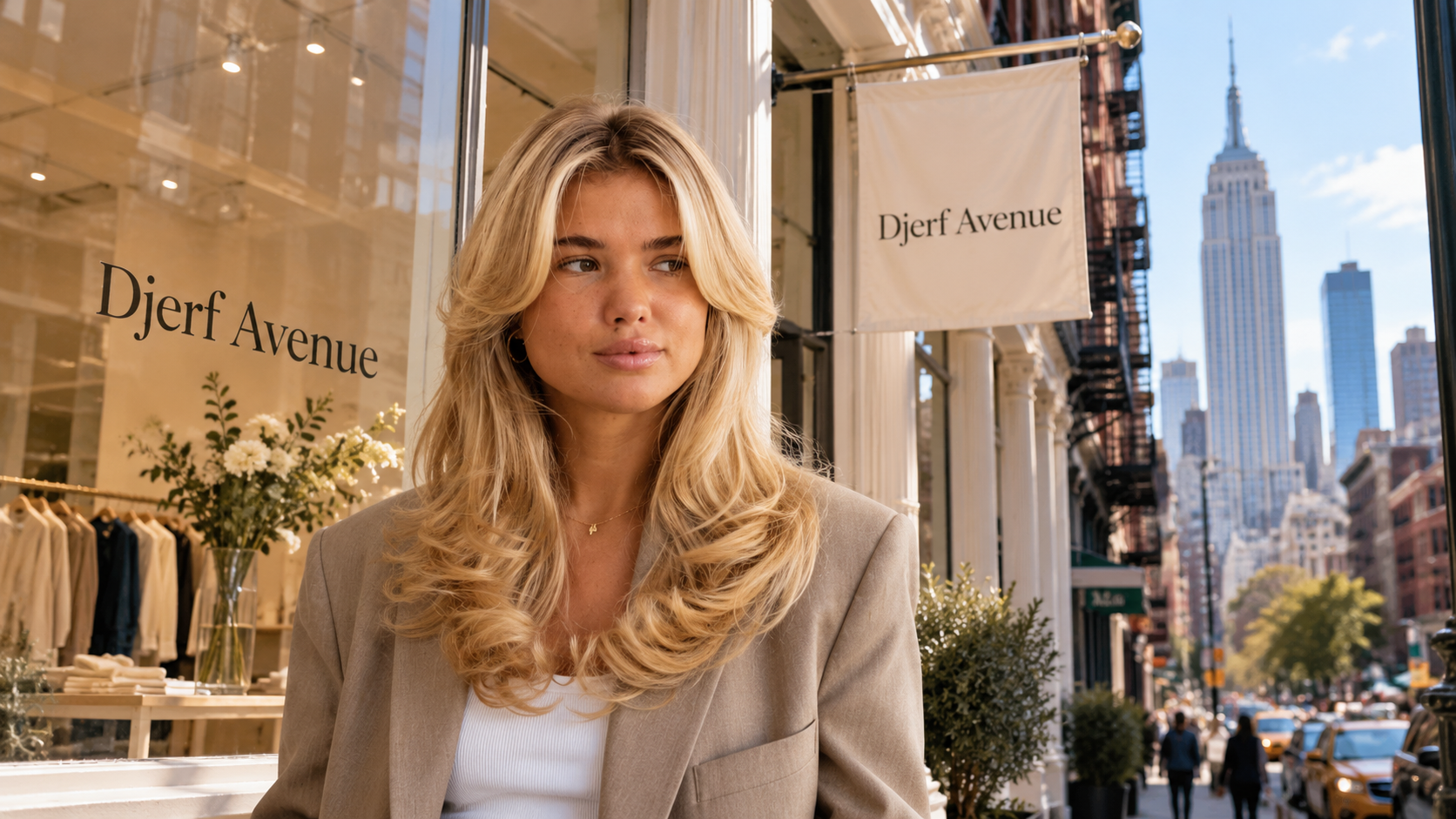
On October 3, Djerf Avenue opened at 25 Bond Street in New York, giving the company its first permanent physical retail location. It is a significant step for a brand founded in Sweden in 2019 that built much of its reach through social media, direct-to-consumer e-commerce and a highly engaged international community.
New York came before Stockholm
For a Swedish brand, Stockholm might appear to have been the obvious place to establish a first flagship. Djerf chose differently. Speaking to Fashionista, she said the company did not conduct an extensive exercise to determine the statistically ideal first-store location. Instead, New York had become a particularly important market and community for the brand.
“We didn’t do a lot of research about the best city to do the first store in. It’s always about the gut feeling, and New York is such a special place for us.”
That instinct was not entirely untested. Djerf Avenue had already spent years learning how its online audience behaved when given a physical space. The company held its first New York pop-up three years before opening the permanent store and returned to the city with additional activations, including a week-long beauty pop-up in SoHo in 2024.
Pop-ups became market research
The sequence matters. Djerf Avenue did not enter the United States by committing immediately to a national retail footprint. Instead, temporary stores and community events gave the company a way to observe demand, experiment with the customer experience and see whether the intensity of its digital following translated into real-world foot traffic.
Those events also influenced how the permanent store was designed. Djerf has said the team learned quickly from pop-ups that customers wanted knowledgeable employees and an environment that felt welcoming rather than intimidating. The New York store incorporates those lessons, with staff trained around sizing, fit and fabrication and a warmer interpretation of Scandinavian design.
The company has also repeatedly used local collaborations as part of its U.S. retail strategy. At previous New York activations it worked with brands including BonBon, Bluestone Lane and Leon’s Bagels. Similar partnerships returned for the flagship’s opening weekend, turning the store into more than a transactional retail location.
Physical retail changes customer behavior
Perhaps the most interesting business argument for a permanent store is what Djerf Avenue has learned about purchasing behavior. According to Fashionista, the typical Djerf Avenue customer purchases a higher quantity of items when shopping physically than when purchasing online.
The value of the store also goes beyond transactions. Physical retail gives the company something an e-commerce dashboard cannot fully provide: immediate, qualitative customer feedback. Djerf has described being able to watch customers try on products and hear their first reactions in real time as valuable information for product development and for understanding how the business should evolve.
“You get so much information from the customer that is incredibly important for growing the business and evolving as a business owner.”
A $36 million brand puts down roots
Djerf Avenue generated a reported $36 million in sales in 2024, according to Fashionista. The company has since expanded beyond its original apparel business into categories including homeware and beauty, giving a physical flagship more categories and experiences to showcase than a traditional fashion store.
That makes New York an interesting next stage in the brand’s evolution. Djerf Avenue represents a generation of European consumer companies that can build substantial American awareness before establishing any permanent U.S. retail infrastructure. Social media creates the audience first; physical retail can follow once the company understands where that audience is concentrated and how it behaves.
Could New York become the blueprint?
The bigger question is whether 25 Bond Street remains Djerf Avenue’s only permanent location or becomes the blueprint for a wider U.S. network. The company has not announced a national store rollout, so it would be premature to describe New York as the first step in a confirmed expansion plan.
But the economics Djerf Avenue is describing are worth watching. If customers buy more items in person, stores produce richer product feedback and physical spaces deepen the community surrounding the brand, the strategic argument for additional locations becomes considerably stronger.
What this means for European companies
Djerf Avenue’s path offers a useful model for European consumer brands considering the United States. Instead of treating a flagship as the starting point of U.S. expansion, brands can use digital demand to identify promising markets, validate those markets through temporary activations and only then commit to permanent infrastructure.
For Djerf Avenue, years of internet growth created the audience. Pop-ups created the testing ground. New York is where the company is now testing whether that community can support something much more permanent.