Czech CSG wins place on $4.2bn US Army ammunition plant programme
CSG’s MSM North America can compete for work across seven US Army ammunition facilities under a five-year programme, building on its existing Iowa project.
Czech industrial and defence group CSG has secured a place on a five-year US Army programme to modernise seven ammunition production facilities, giving its subsidiary MSM North America access to competitions for work under a shared ceiling of approximately $4.2bn.
The selection extends CSG’s role in US defence manufacturing beyond its existing Future Artillery Complex project in Iowa. It opens a route to contracts covering new industrial infrastructure, upgraded production lines, automation and the commissioning of additional ammunition capacity.
The distinction between eligibility and booked business is important: the $4.2bn ceiling applies to all selected contractors, not to CSG alone. Individual projects will be awarded through subsequent competitions, and selection guarantees neither orders nor a specific share of spending.
A broader role in America’s ammunition supply chain
The programme uses a Multiple Award Task Order Contract, or MATOC, managed by Army Contracting Command–Rock Island. Under that structure, a pool of qualified companies competes for individual task orders as the Army defines its requirements.
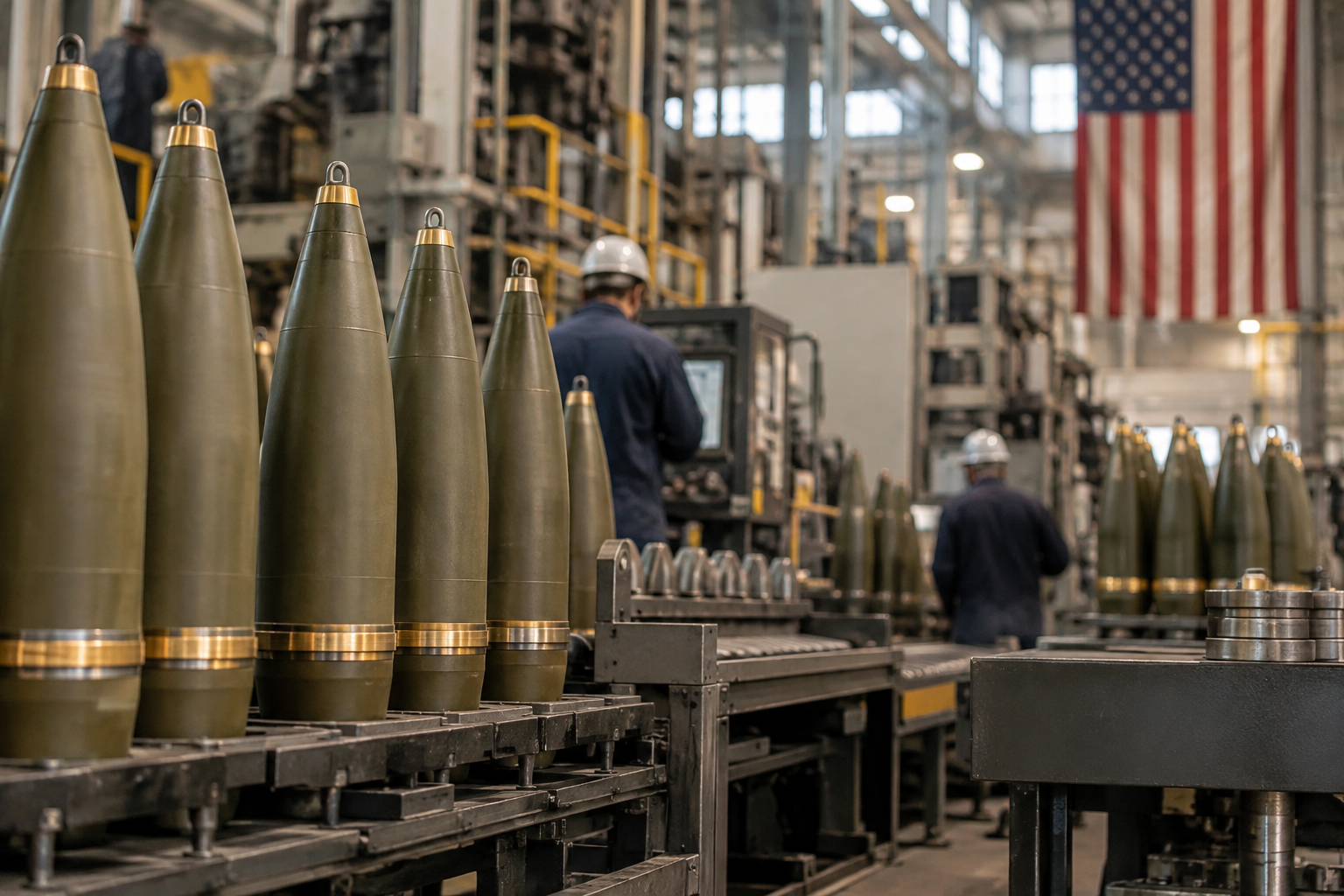
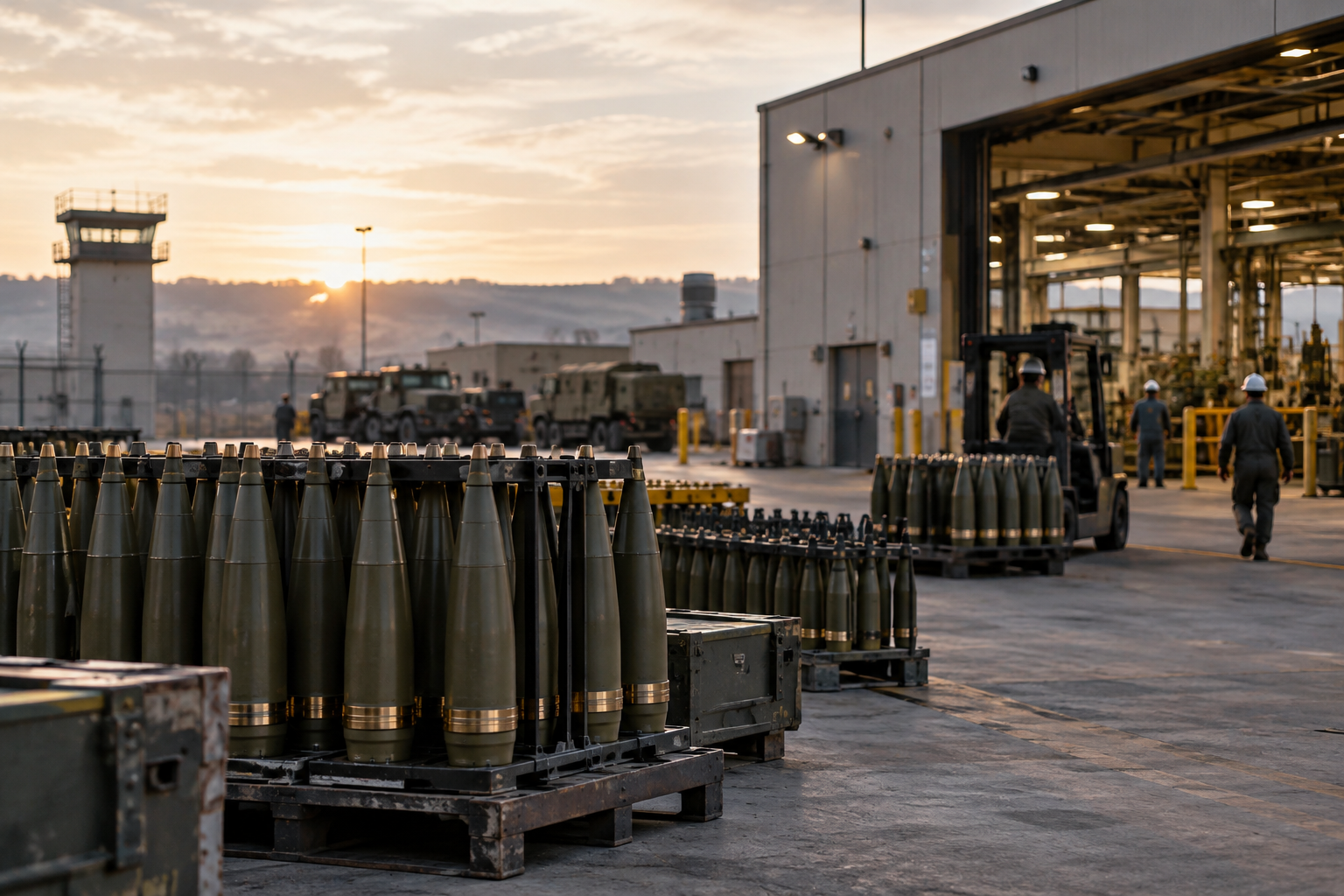
The facilities are government-owned and contractor-operated. Their work spans several stages of ammunition manufacturing, so the opportunity is broader than artillery shell assembly alone. The programme also includes activities related to operating and maintaining industrial infrastructure.
- Holston, Tennessee, and Radford, Virginia: military explosives, propellants and other energetic materials.
- Lake City, Missouri: small-calibre ammunition production.
- Iowa Army Ammunition Plant: filling and assembly of medium- and large-calibre ammunition.
- Scranton, Pennsylvania, and the Quad City Cartridge Case Facility, Illinois: artillery metal components and large-calibre cartridge cases, respectively.
- Milan Army Ammunition Plant, Tennessee: also included among the seven facilities covered.
For CSG, the strategic opening is to sell industrial engineering and production expertise alongside ammunition itself. The framework provides a route to compete for repeat projects across the Army’s manufacturing network, although winning that work will require further bids against other selected contractors.
Iowa provides the foothold
MSM North America’s existing Future Artillery Complex project provides the immediate foundation for that expansion. Euro2day reported that the Iowa project was awarded in 2025 and that experience from it supported the company’s selection for the wider programme.
CSG’s own trading statement, published on November 11, said it broke ground on the complex in the third quarter of 2026. The project is therefore an ongoing US industrial commitment, rather than evidence that the entire complex has already been completed.
The ammunition framework also sits within a wider American expansion. In the same statement, CSG said it had established CSG Land Systems North America in Michigan and announced Firecrest Aerospace’s jet engine production in Wisconsin during the third quarter. Together, those moves indicate an effort to build a broader US industrial presence rather than rely solely on exports.
European manufacturing experience meets US demand
The US opportunity comes amid pressure to expand ammunition output. Defense Express reported delays in the American artillery shell production ramp-up and highlighted CSG’s experience supplying ammunition to Ukraine and supporting licensed production there. That background helps explain the fit, but the framework is a competitive procurement mechanism—not an exclusive mandate to resolve US production bottlenecks.
CSG is also investing in tighter control of its European supply chain. Its November trading statement identified the acquisition of Germany’s Gnaschwitz site as a way to bring nitroglycerin production in-house, alongside its Walsrode nitrocellulose site. The group said full in-house production of energetics remained a goal for the end of 2027.
That production base supports its pitch as a partner capable of understanding the manufacturing chain from energetic materials to finished ammunition. CSG reported revenue of €4.8bn for the first nine months of 2026 and an €18bn backlog, placing the US initiative within a substantially larger defence business.
The next test is conversion: turning qualification into funded task orders. For now, CSG has gained access to a significant US modernisation programme and a chance to extend its Iowa foothold—not a guaranteed $4.2bn revenue stream.