Bracco plans $230m first US contrast-media plant in North Carolina
The Italian diagnostic imaging group plans to create 200 jobs in Sanford as it brings injectable contrast-media production closer to its largest market.
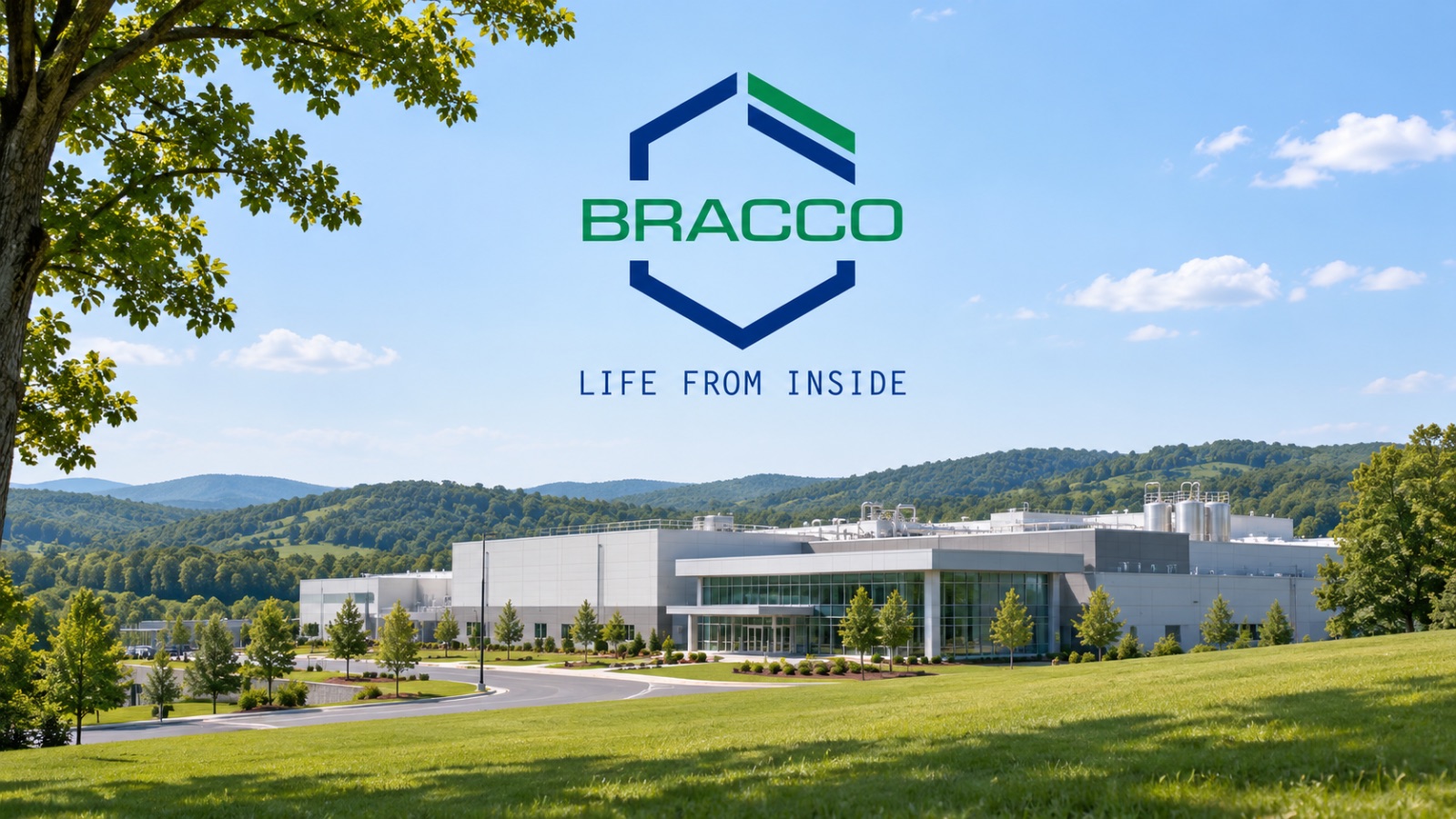
Italy’s Bracco plans to invest $230 million in its first US manufacturing facility for injectable contrast media, adding production capacity in the country that already represents its largest market. The project in Sanford, North Carolina, is expected to create 200 jobs, the company and Governor Josh Stein announced on October 27.
The sterile manufacturing plant will complement Bracco’s existing production operations in Europe, Asia and Canada. The company says the investment will strengthen supply-chain resilience and help meet growing demand for diagnostic imaging products; the governor’s office also cited shorter delivery times and lower transportation costs.
For the Milan-headquartered imaging business, this is a manufacturing expansion rather than an entry into a new sales market. Establishing US production brings supply closer to American hospitals and patients while adding another geography to its manufacturing network.
Local production for its largest market
“The United States is our largest market and home to many of the patients we serve,” said Fulvio Renoldi Bracco, vice chairman and chief executive of Bracco Imaging. “Producing injectable contrast media here in Sanford brings our supply closer to American hospitals and patients and makes it even more resilient.”
Bracco’s broader diagnostic imaging portfolio includes contrast agents for X-ray, computed tomography and magnetic resonance imaging, alongside products for contrast-enhanced ultrasound and molecular imaging. The Sanford announcement identifies injectable contrast media as the plant’s focus, but does not specify individual products or production volumes.
The strategic emphasis is on capacity and reliable supply. Radiology Business, reporting on the investment, noted that the supply chain for diagnostic imaging agents has previously proved vulnerable to disruption. Bracco says additional US sterile manufacturing capacity will help it respond to customer needs and support reliable access to these products.
Founded in 1927, the family-owned group operates in more than 100 countries, employs over 4,000 people and reports approximately €2 billion in consolidated annual revenue. Sanford will extend that international footprint without replacing the established production operations identified in the announcement.
Workforce and performance-linked support
Bracco cited North Carolina’s skilled workforce, life sciences ecosystem and environment for advanced manufacturing as reasons for selecting Sanford. Planned positions span manufacturing, engineering, technical and support operations, quality, warehousing and administration. State officials estimate the jobs could generate more than $20.6 million in annual payroll for the region.
The state’s Economic Investment Committee approved a Job Development Investment Grant for Bracco Imaging Operations USA LLC. The agreement authorizes potential reimbursements of up to $2,859,300 over 12 years, with payments contingent on annual verification that the company has met incremental job-creation and investment targets.
North Carolina estimates the project could grow the state’s economy by $1.78 billion over the grant’s term. That figure is a state projection, not additional company investment. Because Lee County is classified as a Tier 2 county under the state’s economic tier system, the agreement also provides for up to $317,700 to move into a utility fund supporting infrastructure upgrades in rural communities.
Project partners named by the governor’s office include the North Carolina Biotechnology Center, the state community college system, Central Carolina Community College, Lee County, the City of Sanford and the Sanford Area Growth Alliance.
Bracco has not specified a construction timetable or an expected opening date. The announcement therefore establishes the scale and rationale of its US manufacturing commitment, but not when the additional capacity will begin supplying customers.