
TEKEVER Raises $580M as U.S. Expansion Takes Shape
The European autonomous systems company has reached a $6.4 billion valuation months after opening its first U.S. office in North Carolina.
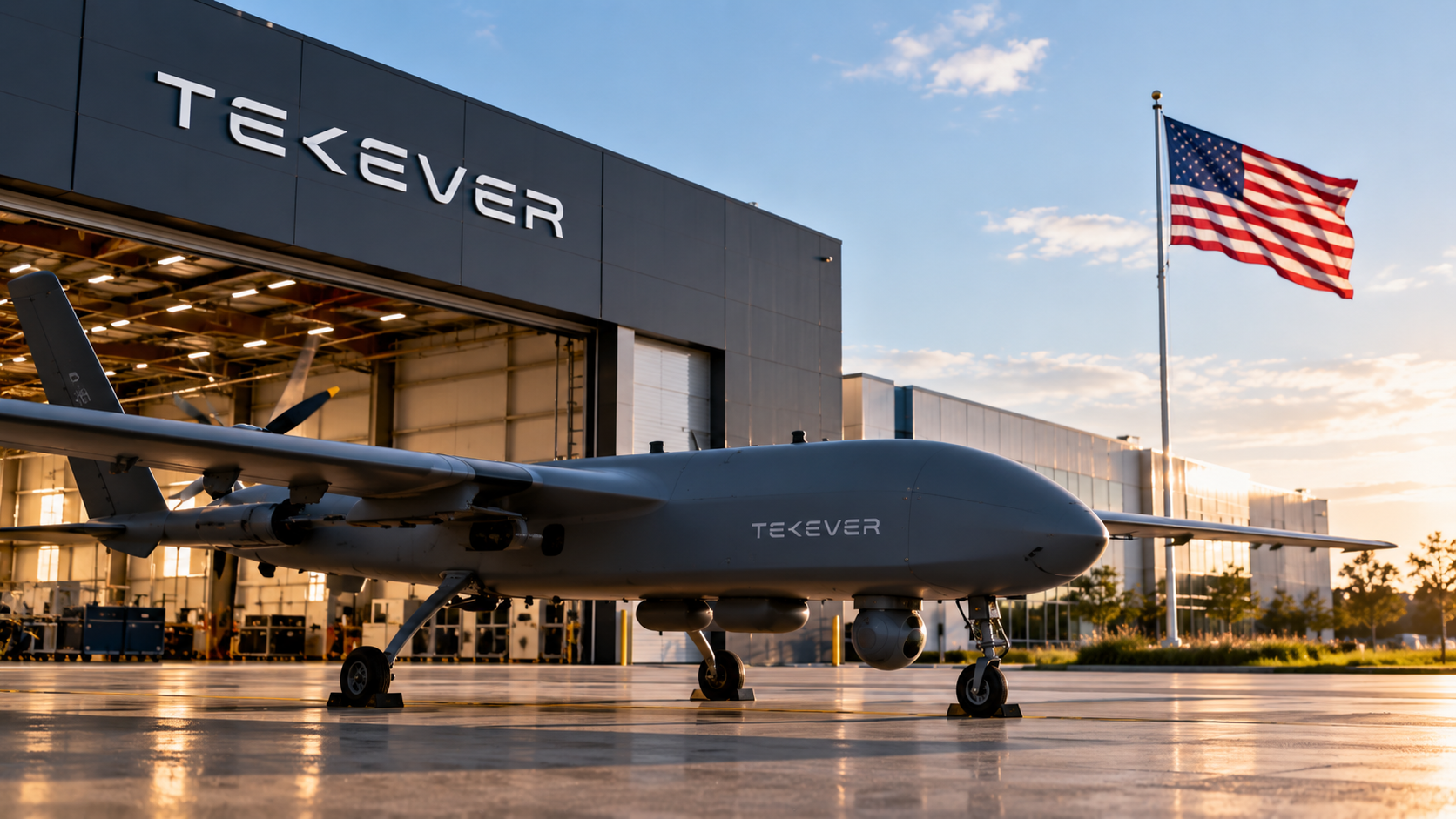
TEKEVER reaches a $6.4 billion valuation
European autonomous systems company TEKEVER has raised $580 million in the first close of a Series D financing, valuing the company at $6.4 billion as it prepares for another phase of international expansion.
UC Investments, the investment arm of the University of California, and Baillie Gifford led the round. Merlyn Advisors joined as a new strategic investor, while existing shareholders Crescent Cove, Ventura Capital and Iberis Capital also participated.
The $580 million represents the majority of the planned financing. TEKEVER expects additional Series D closings over the coming months as it brings further strategic investors onto its shareholder register.
The company says the capital will support international growth, expansion of its industrial and technological capabilities and strategic acquisitions.
American capital enters the story
UC Investments’ participation gives the round a notable transatlantic dimension. The investment represents the University of California investment office’s first direct investment in Europe.
TEKEVER founder and CEO Ricardo Mendes described that decision as an endorsement of the company’s technology, team and long-term ambitions.
For TEKEVER, the American capital arrives at the same time as the company is beginning to establish itself physically in the United States.
TEKEVER opened its first U.S. office in May
In May 2026, TEKEVER formally entered the United States with the opening of its first American office in Fayetteville, North Carolina.
The company chose Fayetteville to put itself close to U.S. defense users and major defense innovation hubs. The office serves as a base for technical support, coordination and day-to-day engagement with American partners.
TEKEVER said the move was intended to provide dedicated in-country expertise and improve its ability to respond to U.S. operational requirements.
That is an important distinction for the company’s American strategy. Instead of approaching the United States solely from Europe, TEKEVER now has personnel and infrastructure inside the market supporting customers and partners directly.
North Carolina fits a larger defense strategy
The Fayetteville office is particularly relevant because of the city’s proximity to Fort Bragg and the wider U.S. special operations ecosystem in North Carolina.
When TEKEVER announced the office, it paired the expansion with a presence at SOF Week in Tampa, Florida, where the company showcased its autonomous systems through the NATO DIANA ecosystem.
TEKEVER’s systems are designed for intelligence, surveillance, reconnaissance and search-and-rescue missions, combining autonomous aircraft with software, artificial intelligence and data capabilities.
The company now operates facilities across Portugal, the United Kingdom, France, Ukraine and the United States and said in May that its workforce had grown beyond 1,300 people.
Operational experience is driving TEKEVER’s rise
The financing also arrives during a period of rapid commercial expansion for the company. TEKEVER was recently selected by the UK Ministry of Defence to deliver CORVUS, the British Army’s new surveillance capability.
The program, built around TEKEVER’s AR5 autonomous system, is worth up to £400 million over ten years.
That contract gives TEKEVER a major reference customer as it pursues growth elsewhere, including in the United States. The company has emphasized operational experience as a differentiator, particularly the use of its systems in demanding real-world environments.
From European technology company to global contender
TEKEVER’s story is unusually long for a company now associated with Europe’s defense-tech boom. Founded in Portugal in 2001, it has spent more than two decades developing technology before reaching its current scale.
The new valuation places it among Europe’s most valuable privately held technology companies and gives it substantially more financial capacity to industrialize its systems, make acquisitions and compete internationally.
The United States is increasingly part of that next chapter. TEKEVER now has an American office, American institutional capital and a stated ambition to deepen its presence across strategic international markets.
That makes the Series D more than a European funding story. It is capital for a company moving from a predominantly European footprint toward a transatlantic one.