Denmark’s Eat Wasted enters US with upcycled pasta, explores local production
The Copenhagen company has launched through Whole Foods and Misfits Market, shifting retail packing to the US as tariffs weigh on its European supply chain.
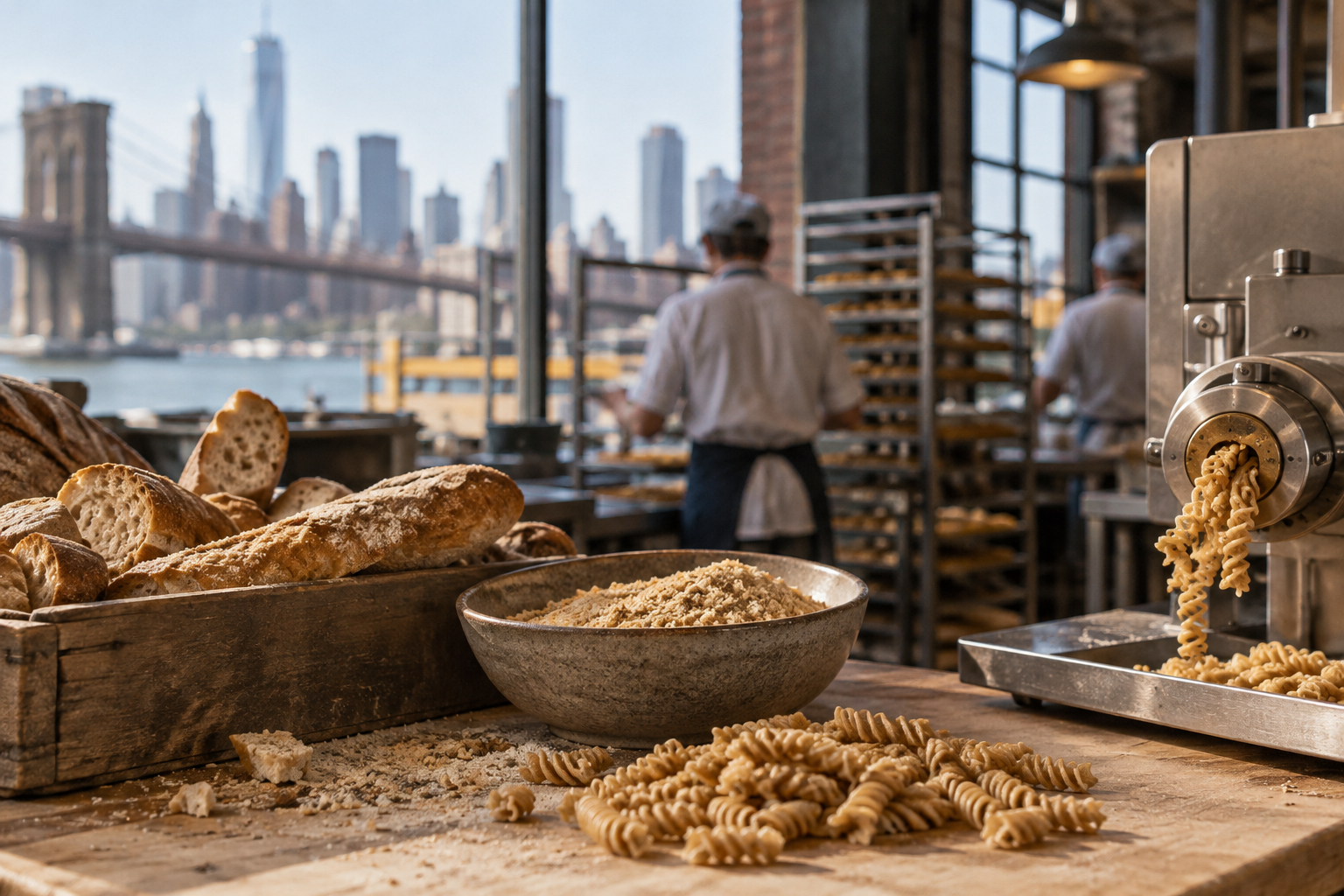
Copenhagen-based Eat Wasted entered the United States in August 2026 with pasta made from surplus bakery bread, securing Whole Foods and Misfits Market as launch partners. The company has already moved retail-box packing to the US to help offset tariffs and is exploring domestic manufacturing as it prepares for further distribution growth.
The launch marks Eat Wasted’s first major expansion beyond its Danish consumer base and specialty retailers elsewhere in Europe, co-founder Leif Frieddman told Food Business News. Its shell, penne and rotini pasta is manufactured in Germany using surplus bread sourced from bakeries in Germany and Belgium.
US traction outweighed the UK
Established in 2022, Eat Wasted initially tested its products through group dinners before commercialising them in Europe. After three years serving Danish consumers, management began looking for its next substantial market opportunity.
The company tested consumer interest in both the United States and the United Kingdom. According to Frieddman, traction developed faster in the US, prompting the business to concentrate its efforts there.
“The vision from day one was to commercialize Wasted in a market with larger potential for scale and impact,” he said. “We wanted to focus our energy in a large English-speaking consumer market, and the UK and US felt like the right steps.”
The choice makes the US a test of whether Eat Wasted can take its surplus-bread proposition beyond a relatively small home market. Its launch partners offer two routes to consumers: grocery shoppers discovering new products at Whole Foods and online buyers at Misfits Market. The pasta is also available through EatWasted.com.
Retail interest preceded launch readiness
Whole Foods requested samples more than two years before the launch, Frieddman said. At that stage, Eat Wasted did not have the capabilities needed to launch internationally. The eventual rollout therefore followed a period of preparation rather than an immediate response to retailer interest.
“Misfits and Whole Foods were really our dream launch partners for Wasted in the US,” Frieddman said. He described Whole Foods as a destination for natural-product discovery and Misfits as having a community that already understood the company’s upcycling approach.
Those channels give Eat Wasted a way to explain what distinguishes its pasta, but the report does not disclose US sales, store counts or repeat-purchase data. The launch establishes market access; its commercial scale remains unclear.
Tariffs push part of the supply chain stateside
Frieddman described regulatory setbacks as minimal, but called tariffs a “huge cost”. Eat Wasted responded by shifting the packing of its retail boxes to the United States, a change he said helped keep its price point accessible to consumers.
That is not yet a move to US pasta production. Manufacturing remains in Germany, while the company works on adding domestic manufacturing options and explores partnerships with American baking companies and pasta producers to prepare for further retail expansion.
The distinction matters for the next phase: Eat Wasted has entered through European production, but its plans now extend to a potential US supply network. Frieddman said new products and additional retail distribution are expected in 2027; the report provides no timetable for domestic manufacturing.