
Ryft Raises £20M to Fuel U.S. Payments Expansion
The Manchester payments platform has raised £20 million to expand across Europe and the U.S. as it pushes into larger customers and global markets.
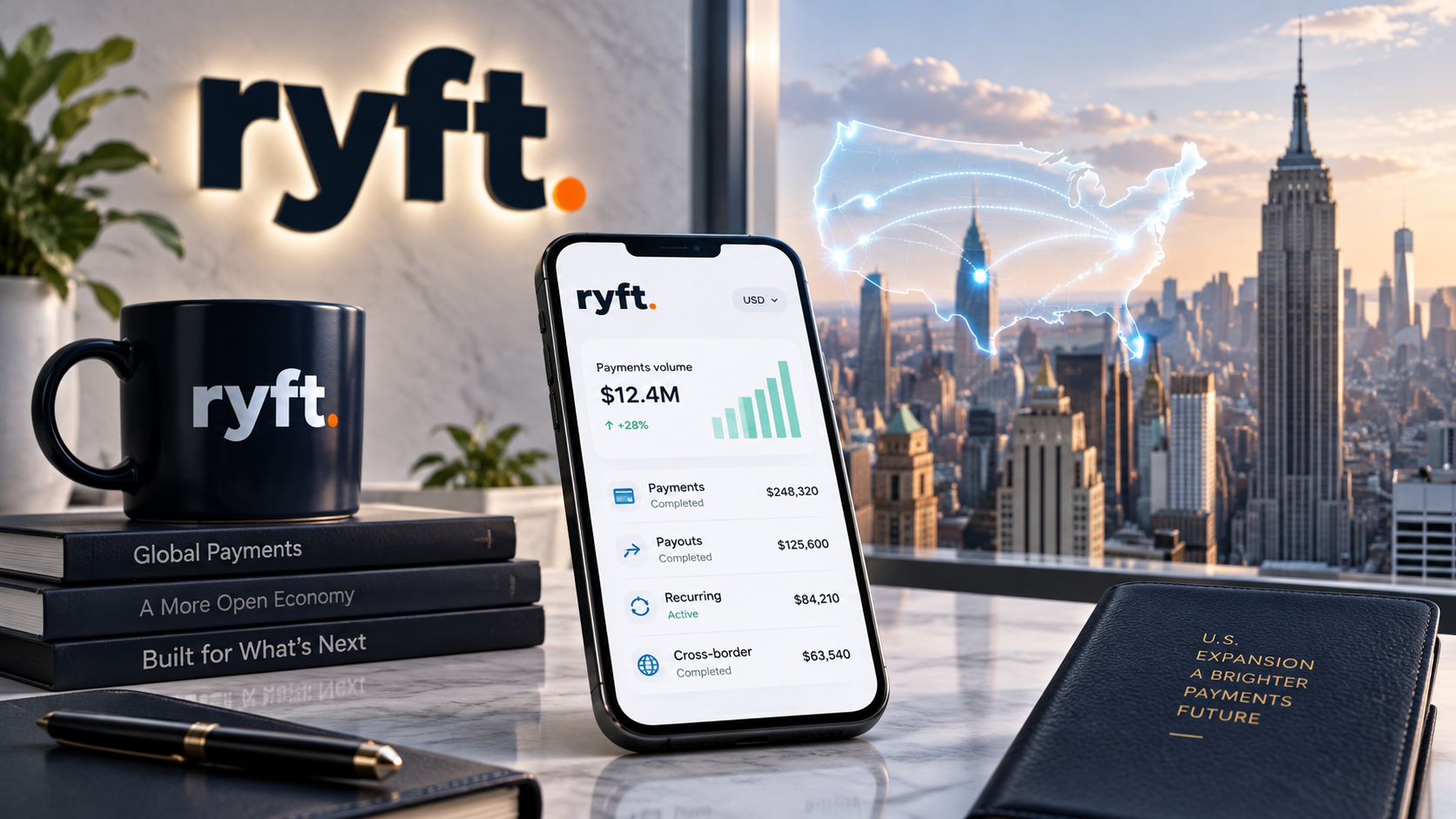
Manchester-based payments company Ryft has raised £20 million in Series B funding as it prepares to expand its business across Europe and the United States.
The round was led by Gresham House Ventures, with participation from existing investors Pembroke VCT and Ingenii Capital. PXN Ventures also joined through the Northern Powerhouse Investment Fund II.
Ryft says the new capital will support international expansion, product development and its move toward larger enterprise customers. The company has tripled its payment-processing volume over the past 12 months and now serves more than 6,500 businesses.
From Manchester to a global payments market
Ryft was launched in 2021 by Sadra Hosseini, Alex Mackenzie and Richard Kirby. It builds payment infrastructure for marketplaces, platforms and multi-location businesses that need to manage more complex transaction flows.
Its technology handles functions including payment processing, merchant onboarding, billing, automated split payments and cross-border payouts.
Customers include Epos Now, Chaiwalla, the Disasters Emergency Committee, Daytrip and Sprive. Ryft says its rapid growth over the past year has given it confidence to move beyond the U.K. and compete in larger international markets.
“This round of investment means we can take what we’ve built in the UK into new European markets and compete on the global stage.”
The U.S. is part of the next phase
Ryft has not yet disclosed a specific U.S. headquarters, launch city or state. Its current announcement instead positions America as part of a broader international growth strategy following expansion across Europe.
That distinction matters because entering the U.S. payments market involves more than simply selling software to American companies.
Payments businesses need to navigate banking relationships, compliance, card networks, merchant onboarding, risk management and local regulatory requirements while competing against some of the world's largest fintech companies.
For Ryft, the Series B therefore gives the company additional capital before taking on a market where scale and trust are particularly important.
A crowded market dominated by large incumbents
The U.S. payments industry is already home to global companies including Stripe, Adyen, PayPal and Block, as well as established banking and payment-processing groups.
Ryft is positioning itself more narrowly around businesses that need to distribute payments between multiple parties, such as marketplaces, franchise groups and software platforms.
That specialization could become important as the company expands. Rather than attempting to replace every part of a merchant's payment stack, Ryft is targeting transaction flows that can become difficult to manage as platforms grow.
Europe comes first
Ryft's international expansion will not begin solely in America. The company is also strengthening its regulatory position in Europe.
It has applied for a full payments licence from the Malta Financial Services Authority. If approved, the licence would allow Ryft to passport its services across the European Economic Area.
That gives the company a two-track expansion strategy: deepen its presence across Europe while preparing to build a larger business in the United States.
Funding the move upmarket
The Series B follows a £5.7 million Series A raised in 2025 and represents the largest U.K. payments Series B announced in 2026, according to Ryft.
The company has not disclosed the valuation attached to the latest round.
Beyond geographic expansion, Ryft says the funding will help it move further into high-growth and enterprise customers. That shift could increase the size and complexity of the businesses using its infrastructure and potentially strengthen its position before a broader U.S. rollout.
What this means for European companies
Ryft's expansion highlights a recurring challenge for European technology companies entering America: the U.S. opportunity may be enormous, but the cost and complexity of competing there can also be much higher.
That makes timing important. Rather than entering the U.S. immediately after launch, Ryft has spent several years building its product, customer base and payment volume in the U.K. before raising a larger funding round for international growth.
For European founders, the broader lesson is that American expansion is often easier once the business has already proven its model at home.
Ryft now has the capital to test whether that model can translate into one of the world's largest and most competitive payments markets.