Isomorphic Labs raises $5bn as US ties underpin push towards clinical trials
The London-based AI drug discovery company has secured US-led financing to develop its technology and advance drug candidates, building on an existing Massachusetts office and American pharmaceutical partnerships.
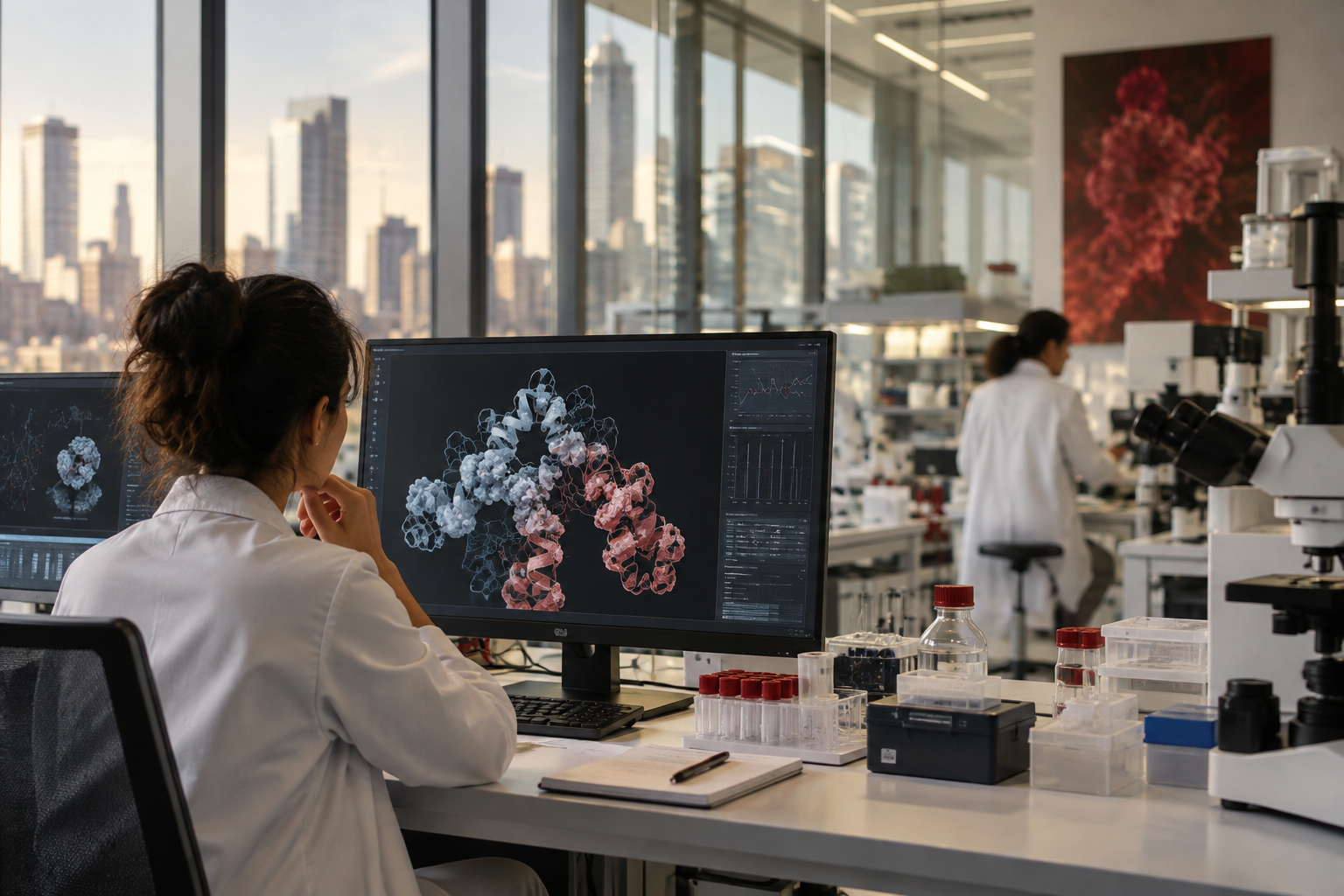
London-based Isomorphic Labs has raised $5 billion, approximately €4.5 billion, in a Series C co-led by US investors Greenoaks and Sequoia Capital, giving the AI drug discovery company fresh resources to advance its medicines towards human trials. The financing, announced on November 17, 2026, will support its proprietary drug-design technology, therapeutic pipeline and clinical development infrastructure.
Andreessen Horowitz also participated, alongside a further significant investment from Alphabet. All existing investors joined the round, including Thrive Capital, MGX, GV, CapitalG, Temasek and the UK Sovereign AI Fund. The company has not disclosed its valuation or a breakdown of how the proceeds will be allocated.
For Isomorphic, the American connection extends beyond capital. The company already has an office in Cambridge, Massachusetts, alongside its London headquarters and Lausanne office, and has drug discovery collaborations with Eli Lilly and Johnson & Johnson. The financing strengthens a business with an established US footprint; the announcement does not specify a new American site or a US-specific spending commitment.
From molecular design to clinical development
Founded in 2021 and led by founder and chief executive Sir Demis Hassabis, Isomorphic is developing IsoDDE, its proprietary drug design engine. The system combines foundational simulation models with AI agents to explore chemical possibilities, refine molecules and investigate complex biological systems across multiple therapeutic areas and types of medicine.
The commercial ambition is broader than supplying a research tool. Isomorphic is developing its own therapeutic candidates as well as working with pharmaceutical partners, while building the capabilities needed to take discoveries into clinical development. Its internal programs include cancer and immune diseases.
“This round enables us to accelerate our progress: building foundational biology models, deepening our systemic disease understanding, and driving our first therapeutic programs towards clinical trials to deliver tangible impact for patients,” Hassabis said.
The company reports positive preclinical results, but its therapeutic programs remain in preclinical development. It has not identified which internal candidate will enter human testing first or provided a specific clinical-trial timetable. Claims about the precision and speed of its design engine therefore remain distinct from evidence that a resulting medicine is safe and effective in patients.
American partnerships provide a commercial route
Isomorphic’s pharmaceutical relationships provide an established channel for applying its technology. In January 2024, it announced collaborations with US drugmaker Eli Lilly and Switzerland’s Novartis. The initial agreements carried combined upfront payments of $82.5 million and potential milestone payments of up to $2.9 billion, excluding separate research funding and royalties.
Those milestone figures are contingent payments, not money already received. Lilly’s initial agreement included $45 million upfront and up to $1.7 billion in milestones. The distinction matters: equity financing can fund Isomorphic’s own programs and development infrastructure without depending on the achievement of milestones under partner contracts.
The partnership portfolio has since widened. Novartis agreed in February 2025 to add up to three further research programs. A collaboration with Johnson & Johnson announced in January 2026 covers multiple drug targets and extends the research scope beyond small molecules to biologics such as antibodies. Together, these relationships give Isomorphic routes to deploy its platform across different development programs.
Capital scale rises; the scientific test remains
The Series C follows a $2.1 billion Series B led by Thrive Capital in May 2026, taking the two financings to $7.1 billion. Isomorphic first raised external capital in March 2025, securing $600 million. The latest round substantially increases the resources available for the transition from computational discovery to drug development.
That transition requires more than better models. The proceeds will support translational research—the work of connecting laboratory findings with human studies—and scalable clinical development capabilities. For its US strategy, the significance is the combination of American investors, an existing Massachusetts presence and pharmaceutical partners, rather than a newly announced market entry. The next substantive test is whether that network and capital can help turn AI-designed candidates into clinically validated medicines.