CLAAS Moves Product Development Closer to American Farmers
German agricultural-equipment manufacturer CLAAS is deepening its U.S. localization strategy with a new R&D center and customer experience facility in Omaha.
German agricultural-equipment manufacturer CLAAS is pushing more of its product development closer to the farmers who use its machines in the United States.
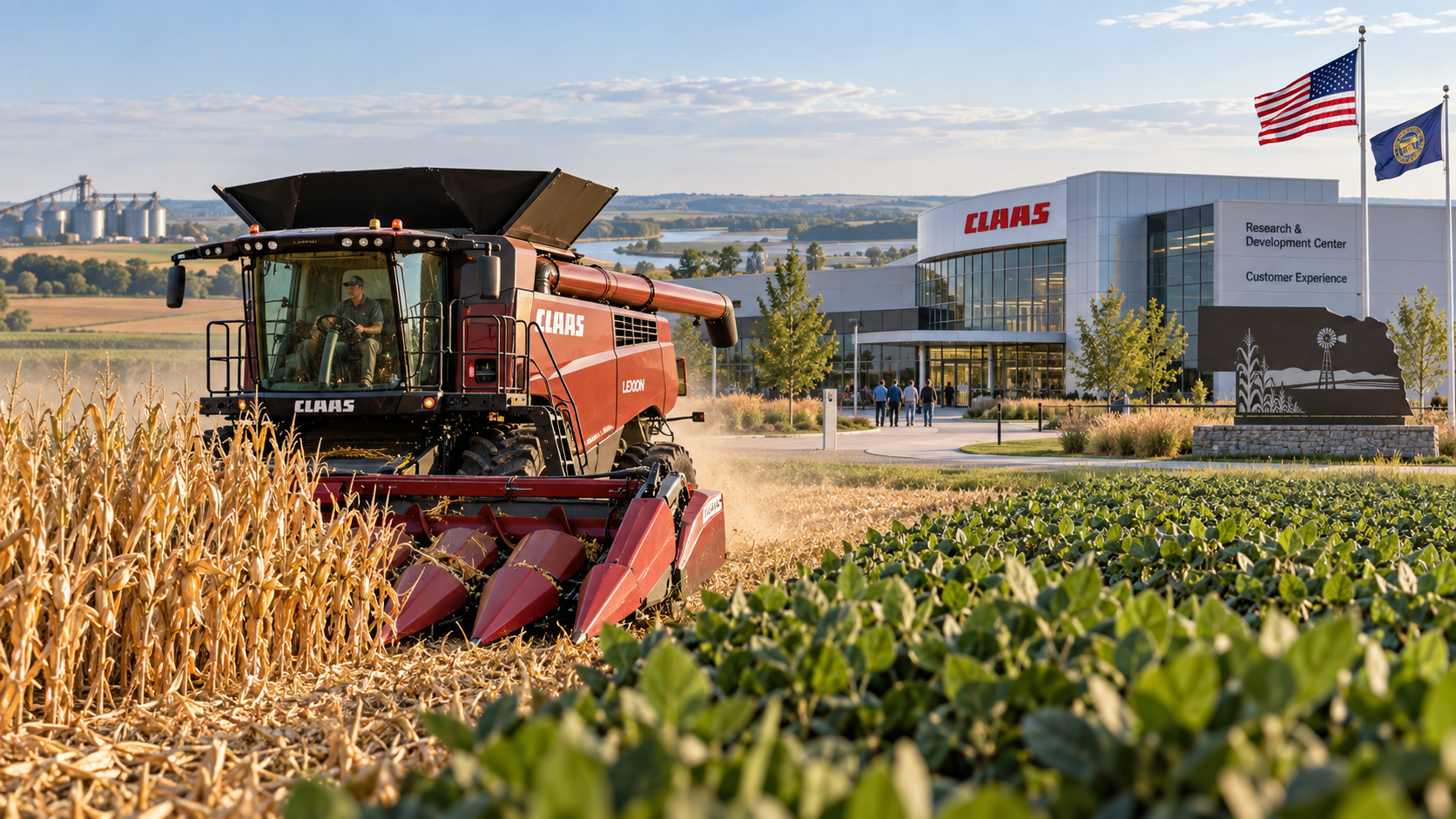
The company is preparing to unveil a new 44,800-square-foot research and development center at its Omaha, Nebraska campus on October 8, expanding a site that already produces CLAAS LEXION combines for the North American market.
The investment is more than an additional building. It reflects a deeper localization strategy in which machinery for the American market is increasingly being designed, tested and manufactured around U.S. farming conditions rather than developed primarily in Europe and adapted later.
Designing machinery around American farms
For CLAAS, the new R&D center brings engineers closer to one of the world's most important agricultural markets and to the crops and operating conditions its American customers encounter every day.
That is particularly relevant for crops such as corn and soybeans, where U.S. field conditions, farm sizes and harvesting requirements can differ considerably from those in Europe. Instead of developing machinery for another market and subsequently modifying it for American customers, CLAAS can increasingly build U.S. requirements into the development process itself.
The Omaha operation therefore becomes more than a North American production outpost. Manufacturing, engineering, customer feedback and product development are being brought together on the same campus.
A more American supply chain
CLAAS is also localizing the physical product. Approximately 40% of the components used in the combines manufactured in Omaha are American-made, according to Farm Progress.
That localization matters strategically. A European manufacturer producing in the United States can shorten parts of its supply chain, work more closely with regional suppliers and reduce the distance between product development, manufacturing and the end customer.
It also illustrates how U.S. expansion can evolve over time. A company may initially enter America through sales and distribution, but as its local customer base grows, the economics of adding manufacturing, engineering and supplier relationships can become increasingly attractive.
CLAAS adds a customer experience center
The company has also opened a new customer experience center on the Omaha campus, adding another layer to its local presence.
For a manufacturer of large, technically complex machinery, bringing customers directly into the production and development environment creates a stronger feedback loop. Farmers and dealers can see the equipment, engage with the company and provide input closer to the teams responsible for building future products.
Together, the R&D center, manufacturing operation and customer facility make Omaha an increasingly important North American hub for the German company.
From market entry to market localization
CLAAS's expansion is a useful example of a broader shift that occurs when European companies move beyond simply selling into the United States.
The deeper stage of American expansion is often localization: creating products around U.S. customer needs, sourcing more components domestically, hiring local engineering talent and positioning decision-making closer to the market.
In CLAAS's case, the company is not abandoning its German engineering roots. It is adding a U.S. development capability that can respond directly to American farmers and then connect those insights back into a global organization.
What this means for European companies
CLAAS demonstrates why the most important U.S. expansions are often not defined by the first office or factory opening. The bigger strategic step can come later, when a European company starts designing its organization and its products around the American market itself.
Moving R&D closer to customers can shorten feedback cycles and help products reflect local requirements from the start. Increasing domestic sourcing can create a more resilient and locally embedded manufacturing operation. And combining engineering, production and customer interaction in one U.S. location can turn a foreign subsidiary into a genuine second operating base.
For CLAAS, Omaha is increasingly becoming exactly that: not simply the place where European-designed equipment is assembled for America, but a location where machinery for American farmers is developed in America.