Audi weighs $7bn Georgia manufacturing investment as VW cuts costs
A proposed second phase would lift investment in Audi’s first US assembly plant to $7 billion, expanding its manufacturing footprint as tariffs squeeze its import-dependent business.
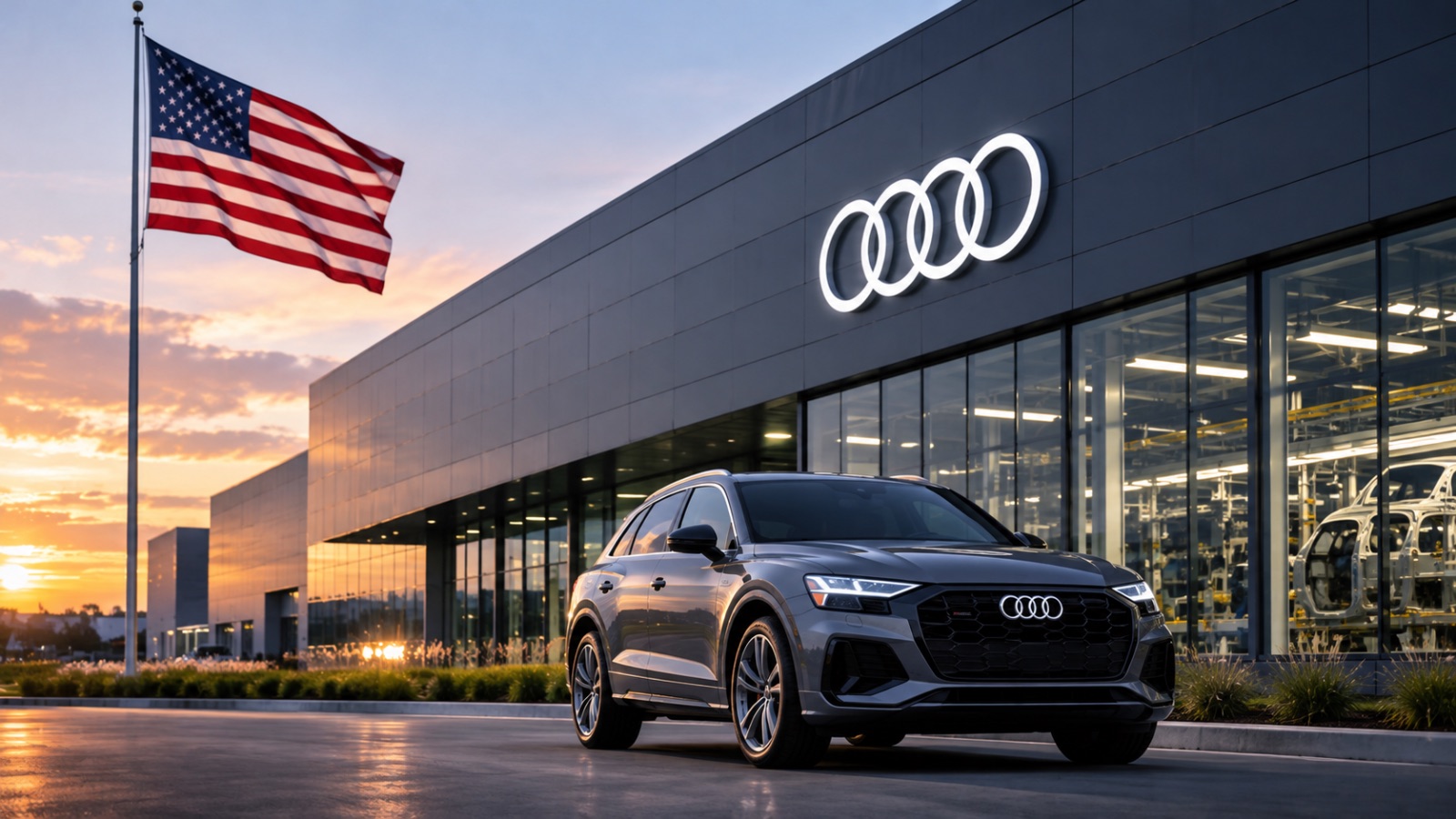
Audi is considering an additional $3 billion investment in its planned Georgia assembly plant, potentially bringing total spending to $7 billion and employment to 7,500 by 2033. The proposed expansion would deepen the German carmaker’s commitment to US manufacturing while parent Volkswagen Group pursues cost reductions in Europe.
The second phase remains under consideration, rather than a confirmed spending commitment. Both autoevolution and CBT News report the expansion proposal, citing reporting based on documents from the Mid-Georgia Gateway Development Authority. It would come on top of the $4 billion project Audi announced on October 25, according to CBT News.
A first US assembly base
The plant is planned for a 1,500-acre site in Peach County, southwest of Macon in central Georgia. The initial phase is expected to open in the early 2030s and employ about 4,500 workers. The potential second phase would add another 3,000 jobs by 2033.
CBT News reports that the initial project is designed to produce 200,000 SUVs annually. The supplied reports do not establish a separate production-capacity target for the proposed second phase, making the additional investment and employment the clearest measures of its potential scale.
According to autoevolution, the intended model line-up includes the Q9, Q7 and Q8, with the Q5 also expected to join them. That would put a substantial part of Audi’s SUV range on US production lines. The publication reports that the Q5 was Audi’s best-selling US model, with 46,215 sales in 2025.
Tariffs strengthen the case for local production
Audi currently imports all vehicles it sells in the United States from Europe or Mexico, according to both reports. A domestic assembly operation would therefore change the structure of its US business, rather than simply add capacity to an existing American factory network.
CBT News puts Audi’s tariff costs on automobiles, steel, aluminium and parts at approximately €1.2 billion, or $1.4 billion, in 2025. Local assembly offers a route to reduce exposure to imported finished vehicles, although the supplied reporting does not quantify the Georgia plant’s eventual savings.
Potential tariff relief could also matter before production begins. Citing Reuters, CBT News reports that US officials had promised relief linked to manufacturing investment. Audi reportedly sought a reduction in the tariff on EU vehicle imports from 15% to 7.5%, while the Commerce Department was expected to agree to roughly 10%. Those terms are reported expectations, not an implemented rate established by the supplied sources.
Georgia backs the project
Georgia’s support package exceeds $1 billion in incentives and infrastructure assistance, according to CBT News. It includes the site, $458 million in tax incentives, more than $120 million in grants covering infrastructure and other project needs, and another $430 million for water, roads and utilities.
The investment would bring Audi closer to its German premium competitors’ manufacturing model. Autoevolution notes that BMW and Mercedes-Benz have operated US production hubs for decades. Audi’s proposed factory would give it a domestic assembly presence in a market where those rivals are already established manufacturers.
Expansion abroad, adjustment at home
The Georgia proposal sits alongside a broader European restructuring. Autoevolution reports that Volkswagen Group is cutting jobs and pursuing plant closures as it confronts European overcapacity and competition in China. Its account does not establish that any specific German closure is directly tied to Audi’s US project.
Audi is also adjusting its German production mix. A separate autoevolution report says A8 production ended at Neckarsulm in October 2026, with the factory now focused on A5 sedans and wagons. That is a model-production change, not a closure of the site.
For Audi, the strategic significance is a shift from serving America entirely through imports toward building SUVs locally. The outstanding question is how far that commitment extends: the reported $4 billion first phase establishes the manufacturing plan, while the additional $3 billion remains a potential expansion.